GHMP Colloredo-Mansfeld
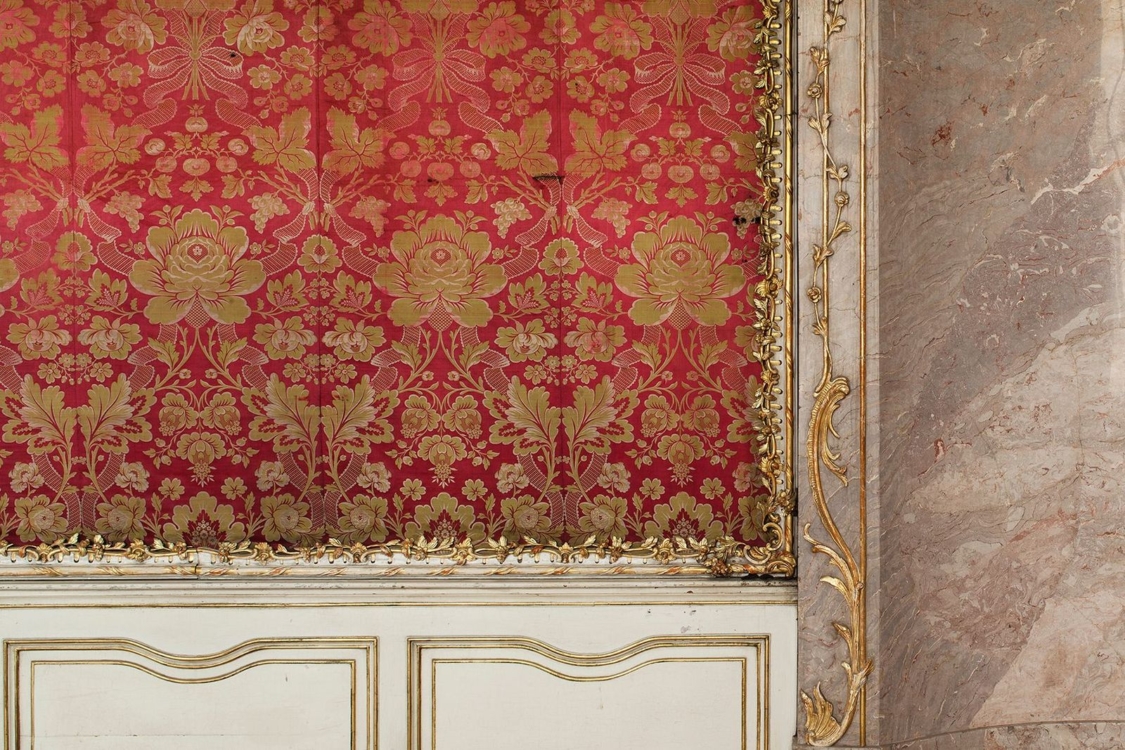
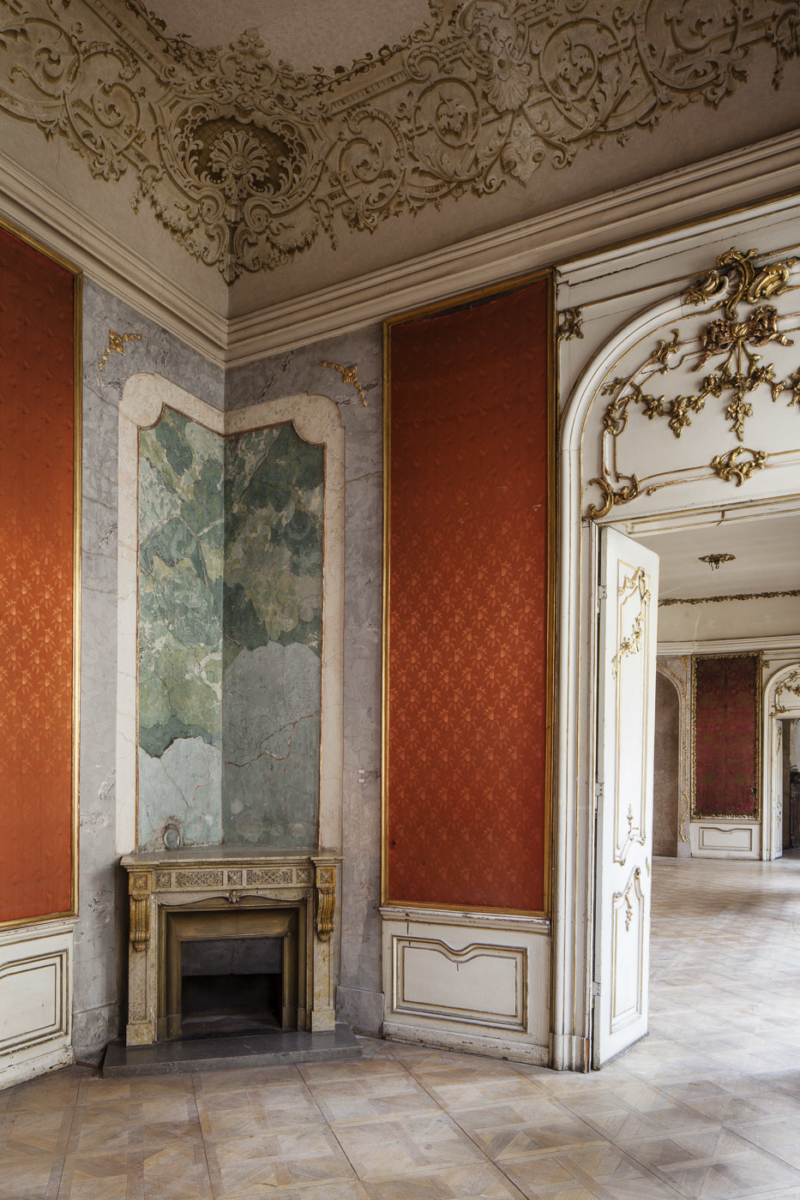
With its rich construction development, fusing the elements of High Baroque and the later Rococo and Second-Rococo adaptations, Colloredo-Mansfeld Palace is one of the most outstanding examples of palace architecture in Prague. The Baroque building, located at one of the most frequented sites of old Prague − next to the Charles Bridge – grew on the foundations of a Romanesque and Gothic built-up area and a Renaissance house. Its owners included an array of interesting personalities, from Count Joachim Andreas von Schlick, who was executed for his participation in the Prague Estatesʼ rebellion, the Jesuit Order and the Elector of Saxony, the cruel Count de Breda, to Prince Heinrich Paul von Mansfeld-Fondi. Between 1736 and 1737, the Prince invited Franz Ignatius Preé to rebuild the original palace, probably designed by Giovanni Battista Alliprandi, along the lines of High Baroque. The palace interiors then received their final Neo-Rococo look during the 1860s thanks to the Auersperg family who, around 1900, also transformed an extensive part of the palace into a luxurious rental house.
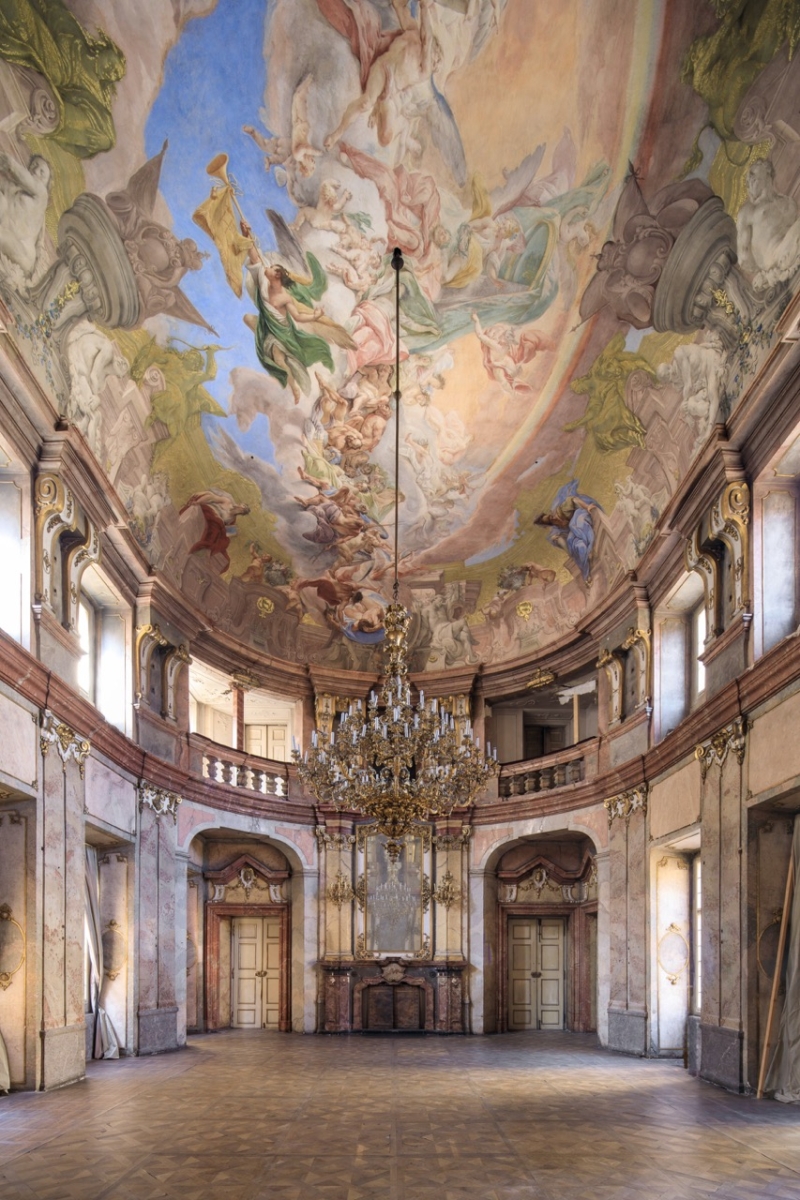
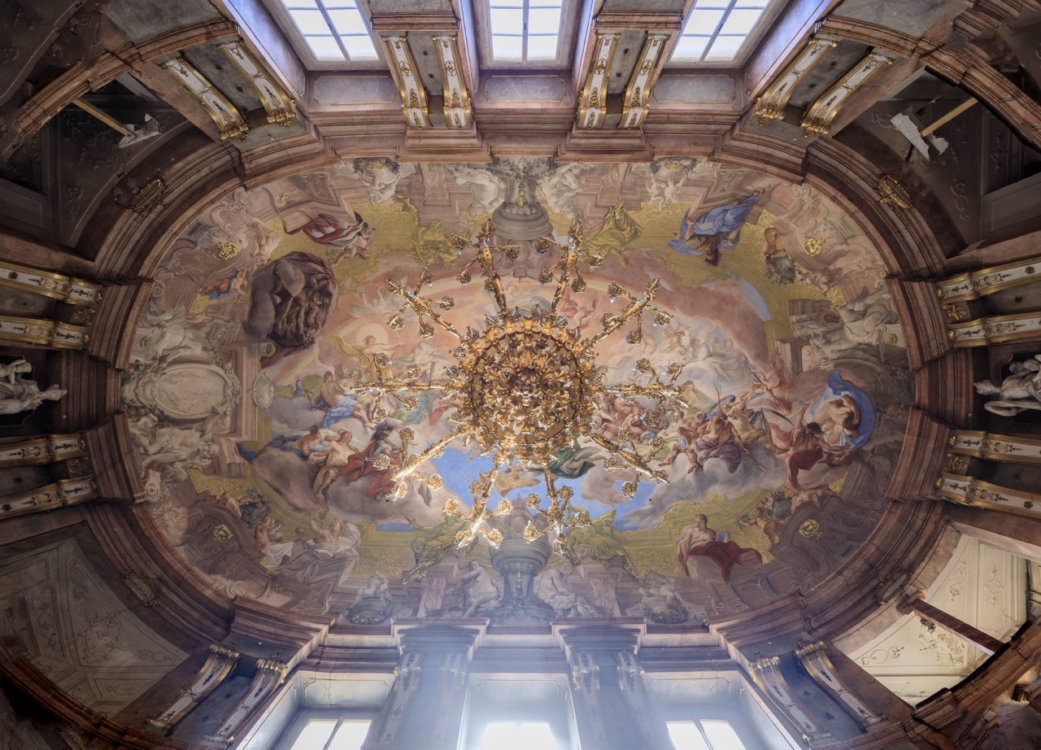
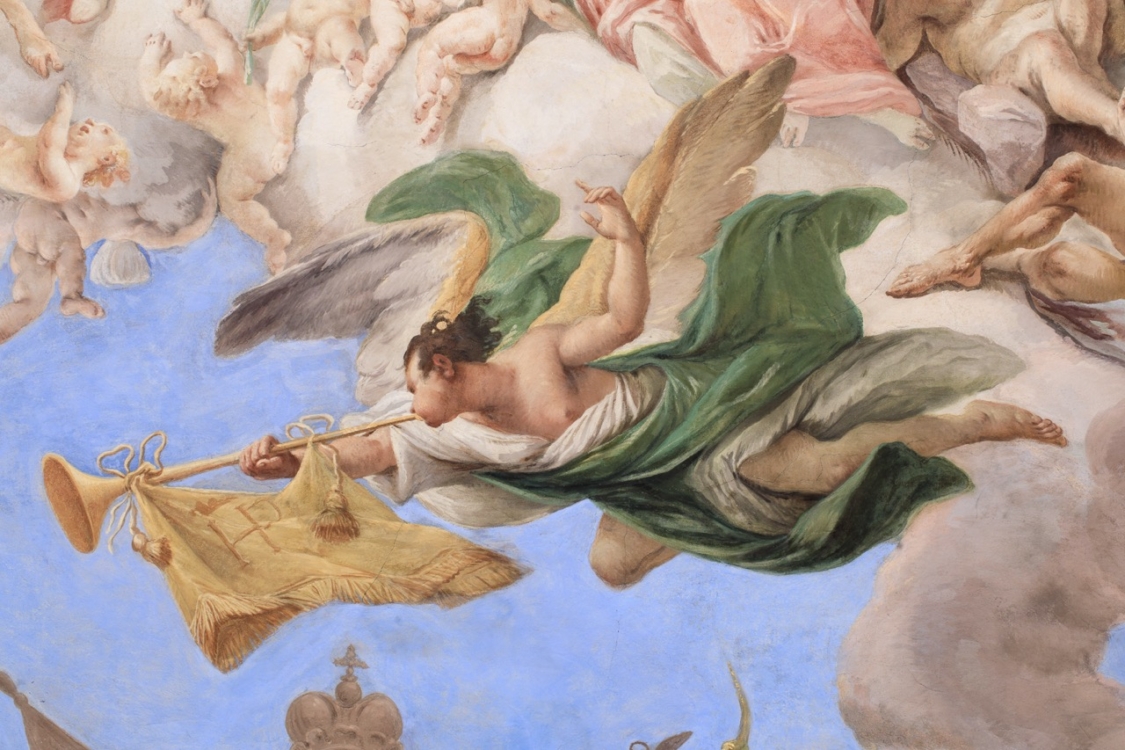
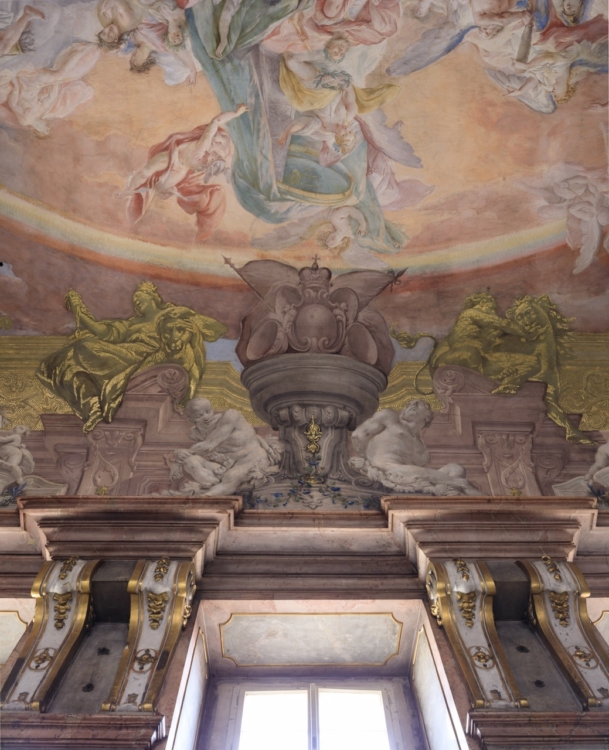
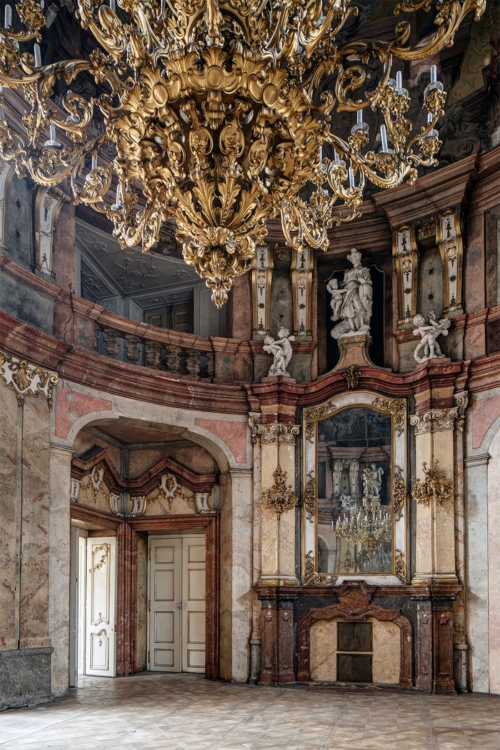
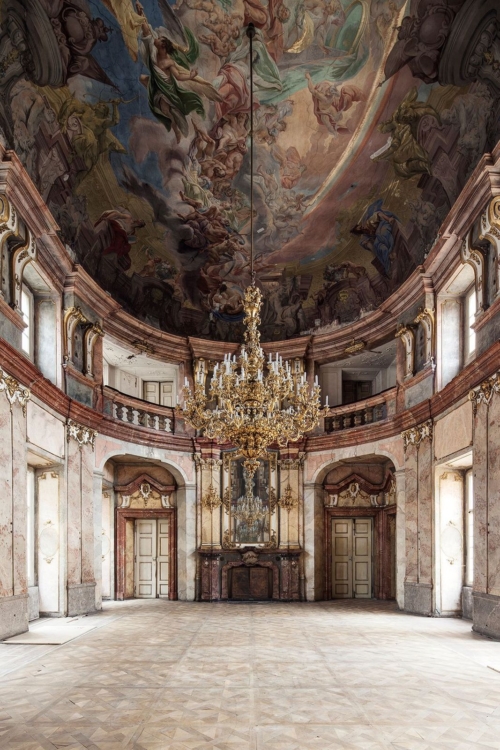
The most beautiful and perhaps the best preserved space in the palace is its dance hall whose decoration was probably completed between 1736 and 1737. The ceiling fresco with the assembled Olympian gods was created by Pietro Scotti and Giovanni Battista Zaist. The palace is not only linked with distinguished noble families but also many with many cultural and historical events, among them the last session of the royal council of the “Winter King” Frederick V., Elector Palatine, after the 1620 Battle of White Mountain. During the period after the Second World War, the palace was used by the Czechoslovak Academy of Sciences, and it is today managed by the Prague City Gallery, which has just completed the first phase of its reconstruction, consisting of the restoration of the fresco in the palace’s south wing.
The restoration of the fresco, which covers an area of over 140 m², was one of the most technically challenging parts of the first phase of the palace’s renovation. Even before construction began, the painting underwent a restoration survey, initial cleaning, and stabilization. The ceiling of the ballroom was then supported by a special structure that allowed work to be carried out on the roof trusses above the painting. Only after these trusses were repaired could the actual restoration of the fresco begin, which was completed in 2025 by a team led by restorer Tomáš Berger.
The sightseeing tour, which opens the representative spaces of the piano nobile to visitors, introduces them to the history and the architectonic qualities of the palace and offers a unique experience of the spaces filled with the traces of history as well the complex relation of modern society to its historical heritage.