Saturday Art Workshop: How to Measure the World
Date and time
21. 11. 2026, 1–6 pm
The building is barrier-free (elevator – call the phone T (+420) 702 283 922)
50 CZK
free for the GHMP Member Plus, GHMP Member Junior and Patron card holders
Related exhibitions
Terra Incognita
Kontakt
Alice Lenská
T (+420) 725 811 936
E vzdelavani@ghmp.cz
Lucie Haškovcová
T (+420) 606 612 987
E edukace@ghmp.cz
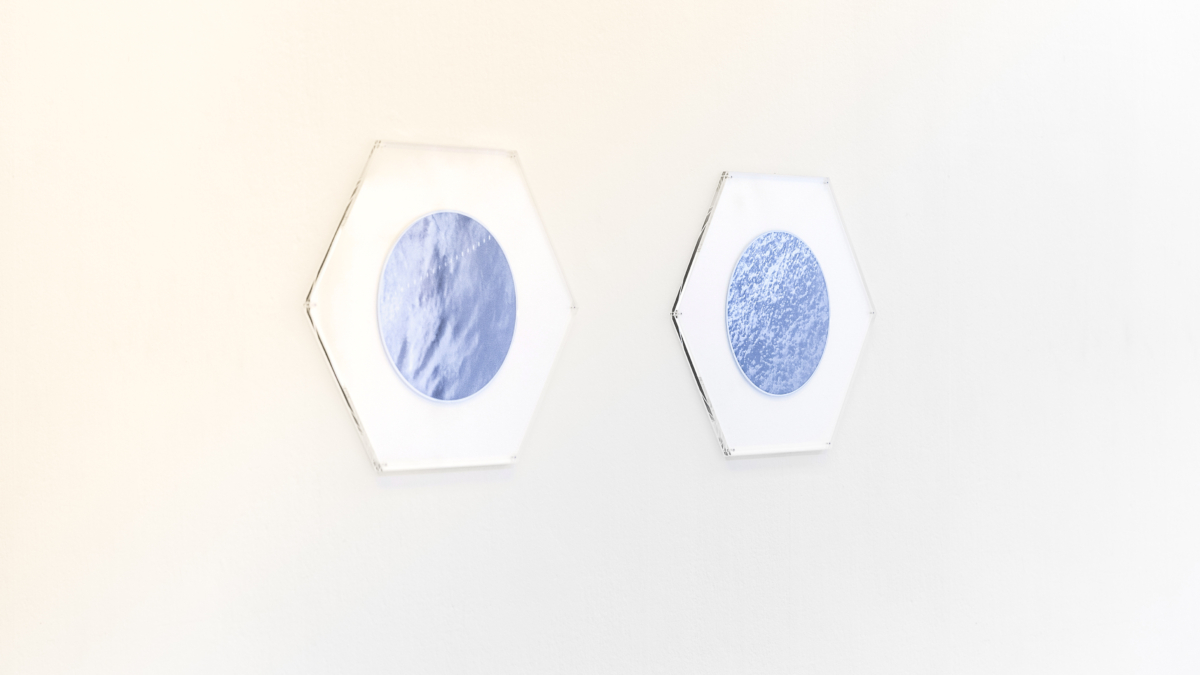
As part of the Saturday workshops, we will draw inspiration from the Terra Incognita exhibition, which explores how the ways we depict, measure and name the world influence our perception of nature and our place within it. It reminds us that technologies are not neutral tools, but arise within a specific historical and social context, while also prompting us to reflect on our dependence on natural resources and our responsibility to the planet.
Through drawing, frottage, collage, monotype and three-dimensional art, we will explore alternative ways of recording, mapping and measuring the world around us. We will create our own tools and seek ways to capture what ordinary technologies miss: smells, sounds and sensations. In doing so, we will discover unexpected ways of looking at what surrounds us. The art workshops will develop sensitivity to different ways of understanding the world and foster the ability to think critically about how images, data and knowledge are formed. The workshops will also draw inspiration from the connections between art and scientific disciplines, such as physics, mathematics, chemistry, biology, sociology, psychology, history, philosophy and ecology, as well as from specific fields like cartography, meteorology and others. Workshop participants will, for example, be able to design their own fictional units of measurement, devise a concept for a research project investigating an imaginary phenomenon, and create new forms of measurement and recording – graphs, plans, diagrams, formulae, mind maps… They will also be able to interpret existing maps and plans in any creative way they choose, or test various fictional phenomena through experimental trials. They can also take on the roles of scientists or research teams.
Through their own creative activity and by using their imagination, they can be encouraged to develop a positive attitude not only towards art but also towards science. For their art experiments, participants can use a wide range of paints and art materials, as well as vinyl records, CDs, magnetic tape, silver-bromide photographs and strips of film, all of which were once used to store information and data. In this way, the Education Centre will become an art laboratory.